
Air Bubble Insulation
Air Bubble Insulation for Industrial & Metal Roofing
A reflective insulation material commonly considered for metal roofing and similar building applications. Here's what it is, where it fits, and what to check before selecting it.
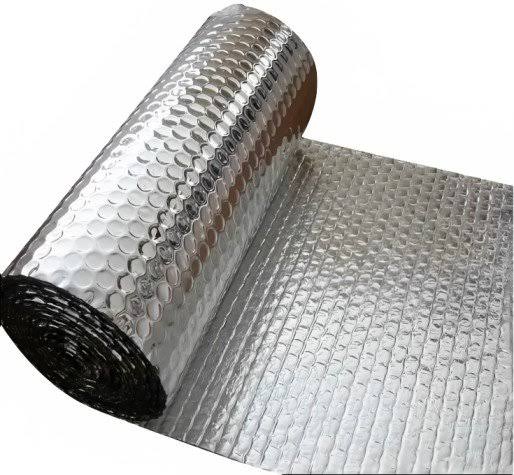
Product at a Glance
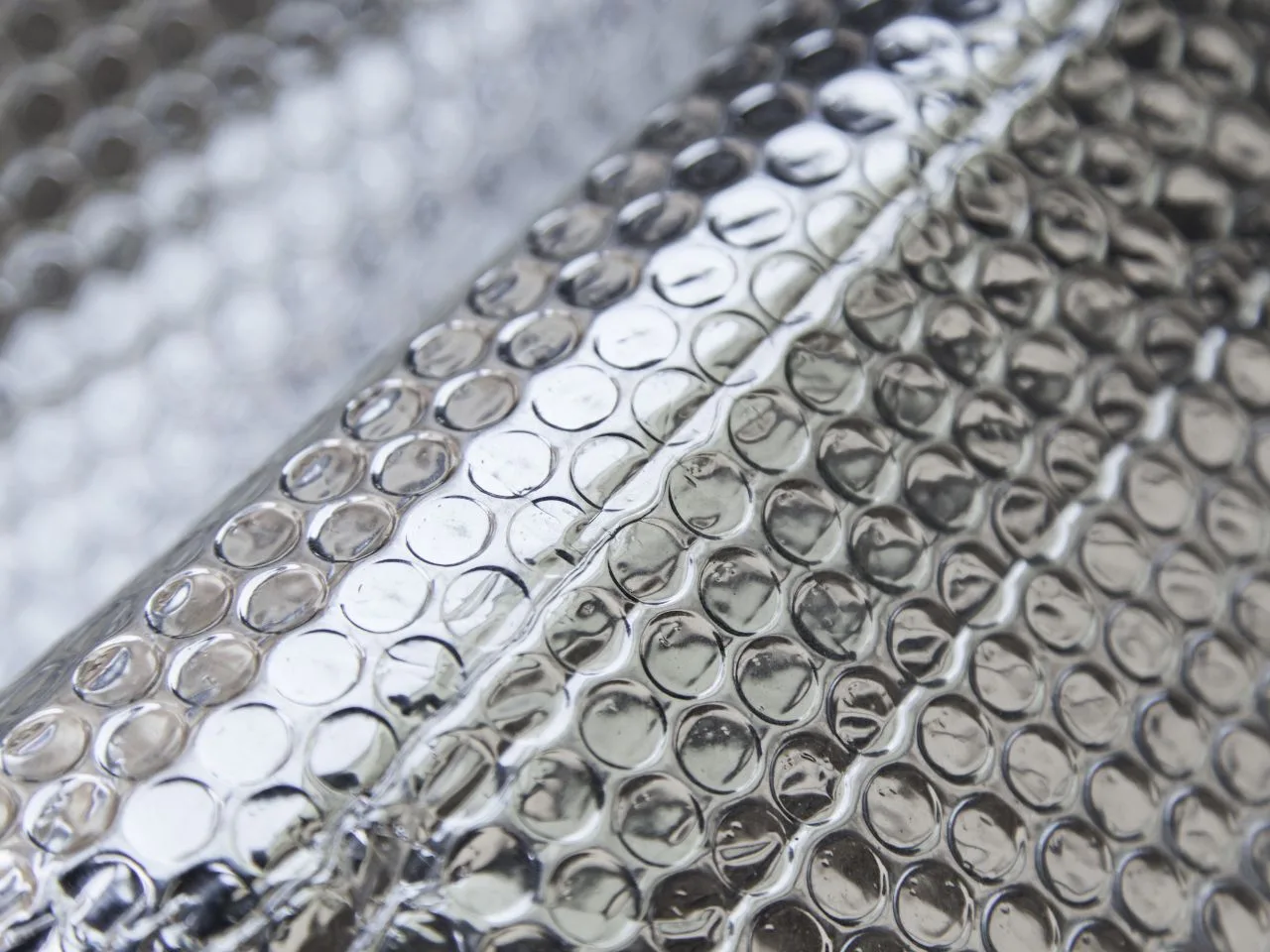
Air Bubble Insulation combines a bubble/air layer with reflective foil-facing surfaces to form a lightweight reflective insulation material. Its low-emittance foil surfaces are designed to reflect radiant heat rather than absorb and re-emit it — which is why the material is commonly considered for metal roofing and similar building applications, where radiant heat gain through the roof sheet is a major factor.
General construction principle for this insulation category. Wonder Cool's exact layer count and facing type are confirmed at enquiry.
Where It Is Commonly Used
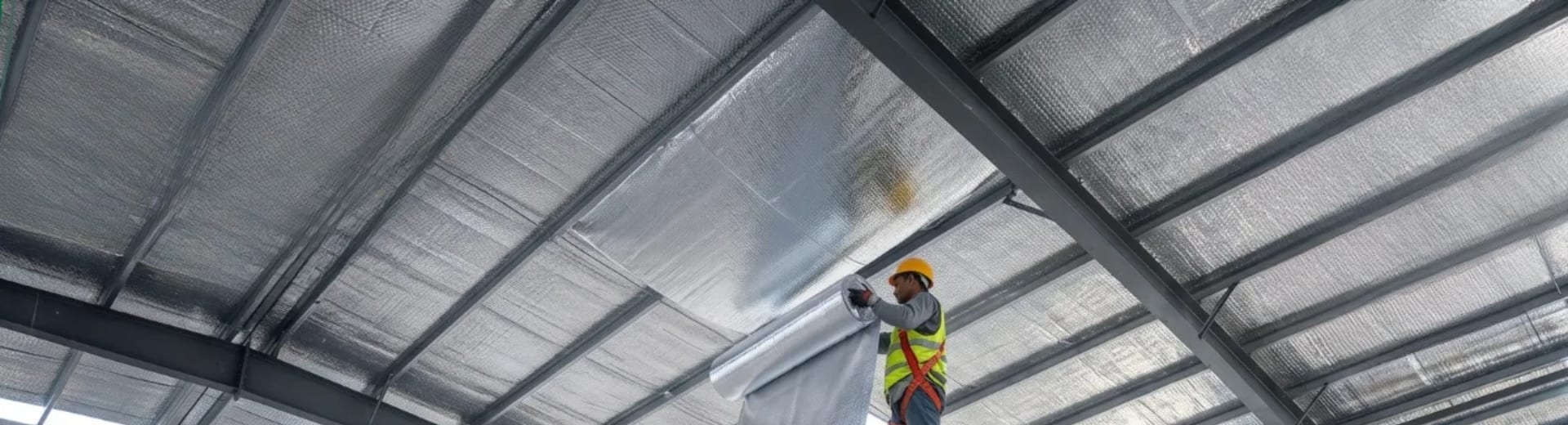
PEB / Metal Roofing
Challenge
Metal roof sheeting heats up quickly in direct sun and radiates that heat into the building below.
Why it may be considered
A reflective facing installed under the sheet, facing an air space, is a common way to address radiant heat gain in metal-roof assemblies.
Warehouses
Challenge
Large, uninsulated roof areas let radiant heat build up under the deck, affecting stored goods and working conditions.
Why it may be considered
Lightweight and quick to install across large roof spans without adding significant structural load.
Industrial / Factory Sheds
Challenge
Factory sheds with metal roofing and limited ventilation can see high radiant heat loads during the day.
Why it may be considered
Often used as part of the roof build-up alongside ventilation or bulk insulation to manage radiant heat.
Poultry / Livestock Structures
Challenge
Poultry and livestock sheds are typically light metal-roofed structures with direct sun exposure, where indoor temperature affects animal welfare.
Why it may be considered
A thin, easy-to-handle reflective layer that doesn't require heavy structural support — commonly considered for agricultural roofing.
Why Air Bubble Insulation Is Considered
- Reflective insulation approach
- Targets radiant heat transfer through low-emittance foil facings, not bulk conduction resistance.
- Lightweight, thin build-up
- Adds minimal weight and thickness compared with bulk insulation materials.
- Fits common metal-roof assemblies
- Roll form and thin profile suit typical PEB and metal-roof detailing.
- Simple handling and installation
- No fibrous irritation to handle, and installs as a simple roll-out layer.
- Reduces radiant heat transfer when installed correctly
- Only performs as intended when the reflective surface faces an adequate open air space.
Product Configurations
Air Bubble Insulation is available in different configurations depending on the application and project requirement. Contact Wonder Cool for the current construction, dimensions and technical specification.
Request Product SpecificationIs Air Bubble Insulation Right for Your Requirement?
Selection depends on the complete roof/building system and project requirement.
- 01Roof or building construction — sheet type, purlin spacing, and how the insulation will be fixed.
- 02Primary heat-control objective — radiant heat gain, conductive loss, or general thermal comfort.
- 03Available installation space — whether the assembly can maintain the air space the system depends on.
- 04Condensation and moisture conditions — humidity levels and whether a vapour barrier is also needed.
- 05Fire, acoustic, or project-specification requirements set by the building code or client.
Installation Essentials
- Maintain continuity across the full roof or wall area — gaps in coverage reduce the reflective effect.
- Tape or lap joints and overlaps correctly to keep the reflective surface continuous.
- Avoid damaged, punctured, or uncontrolled gaps in the material, which compromise performance locally.
- Maintain the air space the system depends on — reflective insulation only performs as intended facing an open air gap.
- Coordinate roof penetrations, flashing, and cladding details with the insulation layer during installation, not after.
Final installation should follow the selected product/system instructions and project requirements.
Looking at Other Insulation Types?
XLPE Foam Insulation
A closed-cell foam insulation, valued for moisture resistance in HVAC and pipework applications.
View productGlass Wool Insulation
A fibrous thermal and acoustic insulation, commonly used for roof and wall under-deck insulation.
View productRock Wool Insulation
A mineral-wool insulation known for higher service temperatures and fire performance.
View product
The right insulation type depends on the application and required performance.
Frequently Asked Questions
- What is Air Bubble Insulation?
- It's a reflective insulation made from one or more layers of air-bubble film sandwiched between foil-faced outer layers, designed to reflect radiant heat rather than absorb it.
- Where is Air Bubble Insulation commonly used?
- It's typically considered for PEB and metal roofing, warehouses, industrial sheds, and poultry or livestock structures — anywhere radiant heat through a metal roof is a concern.
- Can it be used under metal roofing?
- Yes — under-deck use beneath metal roof sheeting is one of its most common applications, generally installed facing an open air space below the sheet.
- Does reflective insulation need an air space?
- Yes. Reflective insulation is only rated to perform when its foil surface faces an adequate open air gap — sandwiching it directly between two solid surfaces significantly reduces its effectiveness.
- What information should I share before selecting a configuration?
- Your application, roof or building type, approximate area, project location, and any specification already provided — that's enough for us to discuss the right configuration.
Next step
Discuss Your Air Bubble Insulation Requirement
Share a few project details and we'll help you work out the right configuration:
- Application (roof, wall, duct, or structure)
- Approximate area to be insulated
- Roof or building type
- Project location
- Known specification, if available