
Insulation Solutions for Industrial & Building Applications
Explore insulation by application, material and project requirement.
What Are You Insulating?
Every application brings a different insulation challenge. Start with what you're dealing with, not the material.
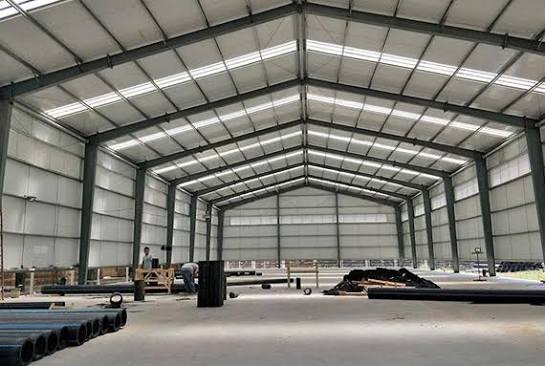
Industrial & PEB Roofing
Primary challenge
Roof heat gain
Metal roof sheeting conducts and radiates heat quickly. Under-deck insulation is used to cut roof heat gain and manage condensation forming on the underside of the sheet.
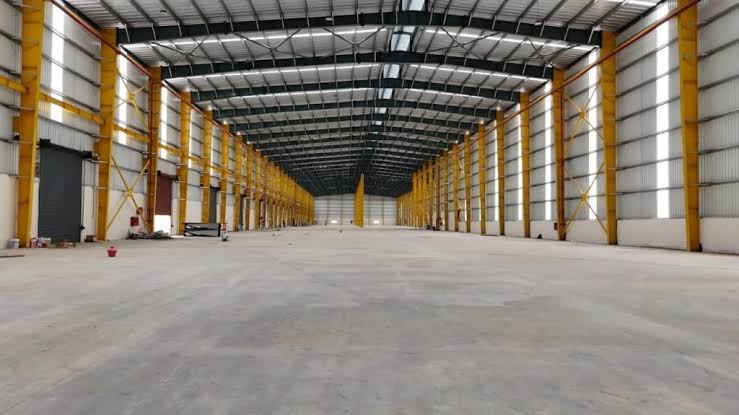
Warehouses
Primary challenge
Roof heat load / indoor conditions
Large uninsulated roof and wall areas let heat build up under the deck, affecting stored goods and working conditions — roof heat gain and general thermal comfort are the main considerations.
HVAC & Ductwork
Primary challenge
Thermal loss + condensation
Ducts and chilled pipework lose or gain heat through their walls, and any surface that drops below the surrounding air's dew point will sweat — thermal loss and condensation control both matter here.
Poultry & Livestock Structures
Primary challenge
Heat exposure / indoor environment
Poultry and cattle sheds are typically light metal-roofed structures with direct sun exposure — reducing radiant heat gain is central to keeping the structure liveable for the animals inside.
Our Insulation Range
Four material families, each suited to a different mix of heat transfer, moisture, and installation conditions.
Air Bubble Insulation
A reflective insulation — layers of air-bubble film sandwiched between foil-faced outer layers.
Commonly considered for
Metal roof and wall underlayment, duct and pipe wrap, agricultural shed roofing.
Worth knowing
Works differently from bulk insulation: it targets radiant heat via a low-emittance foil surface, and only performs as intended when installed facing an open air gap.
XLPE Foam Insulation
A closed-cell, cross-linked polyethylene foam — sold as sheet, roll, or pre-formed pipe sections.
Commonly considered for
HVAC ductwork, chilled-water and refrigerant pipework, condensation-control applications.
Worth knowing
The closed-cell structure strongly resists moisture and water-vapour ingress, often without needing a separate vapour barrier.
Glass Wool Insulation
Fibers drawn from molten glass, bonded into blankets, rolls, batts, or boards.
Commonly considered for
PEB and metal-roof under-deck insulation, warehouse roof and wall insulation, HVAC duct wrap.
Worth knowing
Lightweight and cost-effective bulk insulation with good general-purpose thermal and acoustic performance — though it loses much of its value if compressed or wet.
Rock Wool Insulation
Fibers spun from molten basalt and/or slag, bonded into blankets, mattresses, or rigid boards.
Commonly considered for
High-temperature industrial process and equipment insulation, fire-rated partitions, acoustic insulation.
Worth knowing
Higher maximum service temperature and generally better fire performance than glass wool — it's non-combustible and doesn't melt or drip.
Choosing Insulation Starts With the Application
There isn't one "best" insulation material — the right choice depends on what the application actually demands. In practice, that usually comes down to a handful of factors:
- Application
- Roofing, ductwork, pipework, or a structural void each favour different forms.
- Heat-transfer requirement
- Radiant, conductive, or convective heat is dominant in different situations.
- Temperature conditions
- Ambient extremes and any process/equipment temperature the insulation will see.
- Moisture & condensation
- Whether the surface risks sweating, and whether a vapour barrier is needed.
- Acoustic requirement
- Some applications also need sound absorption alongside thermal performance.
- Fire-performance requirement
- Project or code-driven combustibility and fire-rating expectations.
- Installation method
- Roll-out, wrap, board-fix, or spray — driven by the substrate and access.
- Available space
- Cavity depth or clearance can rule some material thicknesses out early.
Where Each Material Is Typically Considered
A general starting point, not a specification recommendation — final selection depends on project requirements.
| Material | Industrial & PEB Roofing | Warehouses | HVAC & Ductwork | Poultry & Livestock Structures |
|---|---|---|---|---|
| Air Bubble | Commonly considered | Project dependent | Commonly considered | Commonly considered |
| XLPE Foam | Commonly considered | Project dependent | Commonly considered | Less commonly selected |
| Glass Wool | Commonly considered | Commonly considered | Commonly considered | Less commonly selected |
| Rock Wool | Project dependent | Project dependent | Project dependent | Less commonly selected |
Based on general industry knowledge for each material category, not verified Wonder Cool test data. Project dependent means the material is sometimes used this way but isn't the primary documented fit — talk to us about the specifics of your project.
Start With the Requirement, Not the Material
Rather than leading with a product name, we work through the application first — the material follows from that.
- 01
Understand the application
- 02
Identify insulation requirements
- 03
Compare suitable materials
- 04
Review technical requirements
- 05
Plan installation
- 06
Discuss the final requirement
Knowledge Centre
Planned topicsAir Bubble vs XLPE: Where Each Fits
How a reflective radiant barrier differs from a closed-cell bulk foam, and when each is the better starting point.
What to Consider When Insulating a Warehouse Roof
The practical factors that shape a roof-insulation decision for a large metal-roofed structure.
Why Condensation Control Matters in HVAC Insulation
Dew point, surface temperature, and why duct and pipe insulation is often sized around sweating, not just heat loss.
Next step
Tell Us What You Need to Insulate
A few project details help us point you to the right material faster:
- The application (roof, wall, duct, pipe, structure)
- Approximate area or length to be insulated
- Project location
- The main insulation challenge (heat, condensation, fire, acoustics)
- Any known material or specification you've already been given